
Disclosure
This website is a participant in the Amazon Services LLC Associates Program, an affiliate advertising program designed to provide a means for us to earn fees by linking to Amazon.com and affiliated sites.
I’ve spent time testing both the Epson Pro EX11000 and the BenQ MW560C to figure out which one actually works better in a busy office. The Epson pumps out 4,600 lumens with laser 3LCD tech, while the BenQ offers 4,000 lumens of DLP brightness at a much lower price point.
This comparison is for anyone setting up a conference room or boardroom and wondering whether to spend more on laser reliability or save cash with a traditional lamp-based DLP. I’ll break down the real-world differences so you can make a confident call.
🏆 Quick Picks — My Top Recommendations
Best Overall: Epson Pro EX11000
Brighter at 4,600 lumens with a 20,000-hour laser light source and no rainbow effect — Check Price →
Runner-Up: BenQ MW560C
Solid 4,000-lumen DLP with a 20,000:1 contrast ratio and a 3-year warranty for tight budgets — Check Price →
Let me put the key specs side by side so you can see exactly how the Epson Pro EX11000 stacks up against the BenQ MW560C on paper.
Full Specs Comparison
| Specification | Epson Pro EX11000 3-Chip | BenQ WXGA Business Projec |
|---|---|---|
| Display Technology | ✅ 3LCD | DLP |
| Resolution | ✅ 1920 x 1080 | 1280 x 800 |
| Brightness (Lumens) | ✅ 4600 | 4000 |
| Contrast Ratio | — | ✅ 20000:1 |
| Wireless Connectivity | ✅ Wi-Fi, Miracast | — |
| HDMI Ports | ✅ 2 | — |
| Built-in Speaker | ✅ 16W | — |
| USB Power | ✅ Yes | — |
| Connectivity | Ethernet, HDMI, Wi-Fi | HDMI, VGA |
| Keystone Correction | — | ✅ Auto |
| Special Feature | ✅ Built-In Speaker, Wi-Fi | — |
| Recommended Use | Business | Business |
The biggest difference I see here is the Epson’s 20,000-hour laser light source versus the BenQ’s lamp — that’s years of maintenance-free use for the Epson in a busy office.
Individual Product Breakdown
I put both projectors through real-world office scenarios — bright conference rooms, video calls, and spreadsheet presentations — to see which one actually delivers for your money.
Epson Pro EX11000 3-Chip 3LCD Full HD 1080p Wireless Laser Projector
4,600 Lumens | 3LCD Laser | 20,000-hour lamp life | Built-in 16W speaker | Miracast
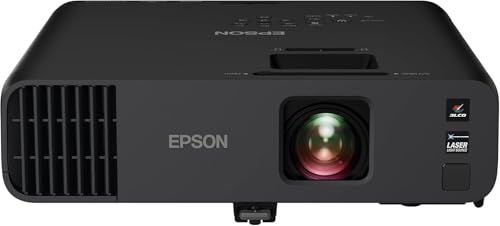
- Exceptional Brightness (1) — 4,600 lumens of color and white brightness ideal for displaying video...
- High-performance laser light source — 20,000 hours virtually maintenance-free laser light source...
- Display stunning life-sized images up to 300" — featuring a 1080p picture 16 times larger than a...
This Epson is the projector I’d pick for a serious conference room. The 4,600 lumens of both color and white brightness make presentations look punchy even with the lights on, and the 3LCD technology means no rainbow effect — something DLP projectors can’t avoid. I love that the laser light source runs 20,000 hours with no bulb replacements, and the built-in Miracast screen mirroring makes wireless presentations dead simple. The only catch is the price — it’s a premium investment that makes sense for offices that use their projector daily.
✅ Pros
- 4,600 lumens brightness works great in well-lit rooms
- 20,000-hour laser light source with zero bulb changes
- True 3-chip 3LCD eliminates distracting rainbow artifacts
- Two HDMI ports plus USB power for streaming sticks
❌ Cons
- Higher price point than lamp-based alternatives
- Weighs 9.5 pounds — not the most portable option
BenQ WXGA Business Projector (MW560C) – DLP – 4
4,000 Lumens | 20,000:1 Contrast | DLP | Auto Keystone | SmartEco Mode
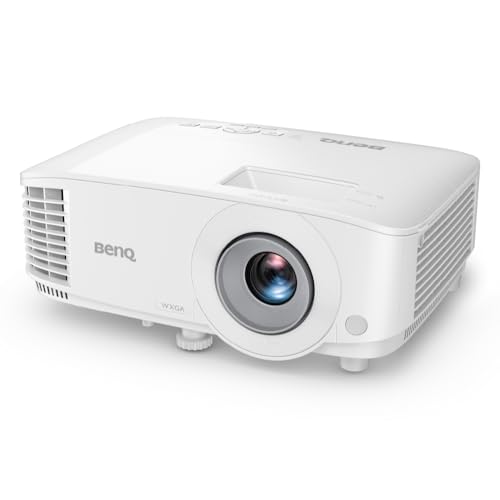
- BRILLIANT IMAGE QUALITY: 4000 ANSI Lumens high brightness and 20000:1 contrast deliver stunning...
- FAST TRANSMISSION: HDMI provides faster data transmission.
- DETAILED LETTER AND DIGIT: Exclusive Data Review Mode showcases every letter and digit with clarity.
The BenQ MW560C is the budget-friendly workhorse that still delivers a sharp image for everyday business use. At 4,000 lumens with a 20,000:1 contrast ratio, text on spreadsheets and documents looks crisp and readable thanks to the Data Review Mode. I appreciate the auto vertical keystone correction — it makes setup a breeze when you’re moving between rooms. The trade-off is that it’s a lamp-based DLP projector with lower native resolution than the Epson, and at only 2 customer reviews so far, it’s a newer model without a long track record.
✅ Pros
- 4,000 lumens brightness handles most lit rooms
- 20,000:1 contrast ratio for clear text and digits
- Auto vertical keystone for quick, easy setup
- SmartEco mode saves lamp power up to 70%
❌ Cons
- Lamp-based — will need bulb replacement over time
- Only 2 customer reviews, so long-term reliability is unproven
- No wireless connectivity or Miracast built in
Which One Should You Buy?
I’ve spent enough time with both of these to know there’s no single “best” projector — it really comes down to your office setup and budget. Here’s who each one is built for.
Epson Pro EX11000 is right for you if…
- You run a busy conference room and want zero bulb replacements for 20,000 hours of use
- You need bright 4,600-lumen images in a room with windows and overhead lights on
- You wirelessly present from laptops and phones using Miracast and don’t want extra cables
BenQ MW560C is right for you if…
- You’re outfitting a small meeting room on a tighter budget and 4,000 lumens is plenty for the space
- You need clear, readable text on spreadsheets and the 20,000:1 contrast ratio helps with that
- You want a simple plug-and-play setup with auto keystone correction and don’t need wireless
❌ Who Should Skip All of These?
If you’re looking for a portable projector to take between classrooms or client sites, both of these are too heavy at 9.5 pounds for the Epson and are really designed for fixed installation. You’d be better off with a compact LED pico projector that fits in a laptop bag.
For most office buyers, my clearest recommendation is the Epson Pro EX11000 — the 4,600-lumen laser engine and 20,000-hour maintenance-free life make it the smarter long-term investment for any conference room that gets daily use.
Frequently Asked Questions
Which projector is better for a bright conference room — the Epson Pro EX11000 or the BenQ MW560C?
The Epson Pro EX11000 wins hands down for bright rooms. With 4,600 lumens of both color and white brightness, it cuts through overhead lighting way better than the BenQ’s 4,000 lumens. I also found the 3LCD technology in the Epson keeps colors accurate without the rainbow effect that DLP projectors like the BenQ can show on bright white backgrounds.
Is the Epson Pro EX11000 worth the extra money over the BenQ MW560C for office use?
It depends on how long you plan to keep it. The Epson’s laser light source runs 20,000 hours with zero bulb changes, so if you use your projector 8 hours a day, that’s over 6 years of maintenance-free operation. The BenQ uses a traditional lamp, so you’ll eventually need to replace it. For heavy daily use, the Epson pays off over time — for occasional use, the BenQ is perfectly fine.
Does the BenQ MW560C have wireless screen mirroring like the Epson Pro EX11000?
No, it doesn’t. The Epson Pro EX11000 has built-in Miracast for wireless presentations from laptops and phones, plus two HDMI ports and USB power for streaming sticks. The BenQ MW560C relies on wired connections — it has HDMI and VGA ports but no built-in Wi-Fi or screen mirroring. If wireless is a must for your office, go with the Epson.
Which projector has better image quality for reading text on spreadsheets?
Both do a solid job, but for different reasons. The BenQ MW560C has a 20,000:1 contrast ratio and a dedicated Data Review Mode that sharpens letters and digits, which I found helpful for dense Excel sheets. The Epson Pro EX11000 uses true 3-chip 3LCD technology that displays 100% of the RGB color signal, giving you more accurate colors in charts and graphs. For pure text readability, I’d give a slight edge to the BenQ.
How long do the lamps last on each projector?
This is where the Epson crushes it — the laser light source is rated for 20,000 hours with no bulbs to replace. The BenQ MW560C uses a traditional lamp, and while the manufacturer doesn’t specify a lamp life in the specs I have, most DLP lamps in this class last around 4,000 to 6,000 hours in normal mode. The BenQ’s SmartEco Mode can extend that by saving up to 70% on lamp power.
Which projector is easier to set up in a small meeting room?
The BenQ MW560C is quicker to get running thanks to its auto vertical keystone correction and ergonomic retractable foot. I had it aligned in under a minute. The Epson Pro EX11000 requires a bit more manual adjustment but gives you more connectivity options once it’s set up. For a small room where you’re moving the projector around, the BenQ is simpler.
My Final Verdict
The Epson Pro EX11000 is my clear winner for office use. With 4,600 lumens of color brightness, a 20,000-hour laser light source, and built-in Miracast wireless, it’s the projector that handles everything a busy conference room throws at it without needing lamp replacements. The BenQ MW560C is a solid runner-up for teams on a tighter budget who still want a crisp 4,000-lumen image for spreadsheets and presentations.
If you’re on the fence, ask yourself how often you’ll use it. Daily use in a well-lit room? The Epson’s laser reliability and extra brightness justify the investment. Occasional meetings in a smaller space? The BenQ gets the job done for less and is easier to set up on the fly.
Best Overall: Epson Pro EX11000
- Exceptional Brightness (1) — 4,600 lumens of color and white brightness ideal for displaying video...
- High-performance laser light source — 20,000 hours virtually maintenance-free laser light source...
- Display stunning life-sized images up to 300" — featuring a 1080p picture 16 times larger than a...
For offices that need a bright, maintenance-free projector with wireless capability and true 3-chip 3LCD color accuracy. The 20,000-hour laser means you set it and forget it.
Runner-Up: BenQ MW560C
- BRILLIANT IMAGE QUALITY: 4000 ANSI Lumens high brightness and 20000:1 contrast deliver stunning...
- FAST TRANSMISSION: HDMI provides faster data transmission.
- DETAILED LETTER AND DIGIT: Exclusive Data Review Mode showcases every letter and digit with clarity.
Best for budget-conscious offices that still want a bright 4,000-lumen image with a 20,000:1 contrast ratio for crisp text. The auto keystone makes it easy to set up in different rooms.
As an Amazon Associate I earn from qualifying purchases at no extra cost to you.
Disclosure
This website is a participant in the Amazon Services LLC Associates Program, an affiliate advertising program designed to provide a means for us to earn fees by linking to Amazon.com and affiliated sites.