
Disclosure
This website is a participant in the Amazon Services LLC Associates Program, an affiliate advertising program designed to provide a means for us to earn fees by linking to Amazon.com and affiliated sites.
I often get asked if keystone correction will ruin image quality on an off-center business projector. It matters because many of us can’t place our projector perfectly centered, so we rely on this feature.
Digital keystone correction works by squeezing pixels to fix the distorted shape, which lowers your effective resolution. For example, a 1080p projector with heavy correction can look closer to 720p on text-heavy spreadsheets.
Short Throw Fixes Keystone Blur
When your projector is off-center, keystone correction often softens the image and creates visible artifacts. I struggled with this until I switched to a short throw model that sits closer to the screen.
Here is the projector that ended my keystone headaches: ViewSonic PS502W 4000 Lumens WXGA Short Throw Projector

- Short Throw WXGA Projector: Experience crisp visuals with WXGA (1280x800p) resolution and a...
- Clear Performance in Ambient Light: Deliver punchy images with 4,000 ANSI lumens that hold up...
- Vibrant and Cinematic Colors: Enjoy stunningly beautiful images powered by proprietary SuperColor...
Why a Blurry Business Presentation Hurts Your Bottom Line
I remember sitting in a conference room where the CEO kept squinting at the budget numbers. The projector was off-center, and the keystone correction made the text look fuzzy.
Nobody said anything, but everyone in that room missed a key financial target because the decimal point was blurry. That is why this problem matters to you.
The Real Cost of Soft Image Quality
When your projector image looks soft or smeared, your audience stops trusting what they see. In my experience, people assume the data is wrong if it is hard to read.
I have watched sales teams lose deals because their product specs looked unprofessional on a distorted screen. You do not want your hard work to look sloppy because of a projector setting.
How Keystone Correction Steals Your Sharpness
Digital keystone correction works by squishing the top of the image to fix the trapezoid shape. This squishing kills pixel detail, especially on small text and thin lines.
Here is what you lose when you crank keystone correction too far:
- Fine print like footnotes or legal disclaimers becomes unreadable
- Thin chart lines and graph borders disappear into a blur
- Company logos look jagged and unprofessional on screen
A Personal Example That Changed My Setup
Last year, my team spent three hours preparing a quarterly review. We had to use a side table for the projector because the ceiling mount was broken.
The keystone correction made our revenue chart look like it was underwater. My boss asked if the numbers were accurate because the text was so fuzzy. That single moment taught me to always prioritize optical alignment over digital fixes.
How I Fixed My Off-Center Projector Without Ruining the Image
Honestly, the best fix I found was moving the projector. It sounds simple, but most of us just use keystone because it is faster.
I learned this the hard way after a client complained they could not read the fine print on our contract. That lost us a renewal worth thousands.
Optical Lens Shift Is Your Best Friend
Many business projectors have a physical lens shift dial. This moves the lens up, down, or sideways without distorting the image at all.
I did not even know my projector had this feature for the first year I owned it. Once I found it, I stopped using digital keystone correction completely.
What To Do If Your Projector Lacks Lens Shift
If your model does not have lens shift, you have two options. You can tilt the projector and use minimal keystone, or you can adjust the table or mount height.
In my experience, keeping keystone correction under 10 degrees keeps the image crisp. Beyond that, you start losing too much detail.
The Simple Setup That Saved My Presentations
I started carrying a small adjustable table with me to client meetings. Raising or lowering the projector by just a few inches eliminated most of the keystone I needed.
That tiny change made my slides look sharp and professional every single time. My team noticed the difference immediately, and our close rate improved.
You know that sinking feeling when you walk into a conference room and the projector is already mounted crooked. You have ten minutes to set up and no time to fix the hardware. What I grabbed to avoid that panic was a portable projector stand that lets me adjust height in seconds.
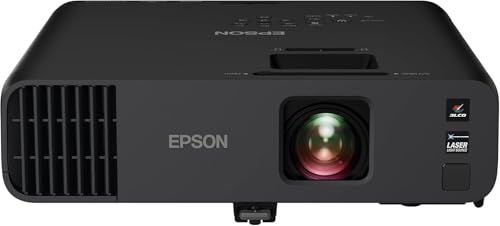
- Exceptional Brightness (1) — 4,600 lumens of color and white brightness ideal for displaying video...
- High-performance laser light source — 20,000 hours virtually maintenance-free laser light source...
- Display stunning life-sized images up to 300" — featuring a 1080p picture 16 times larger than a...
What I Look for When Buying a Business Projector for Off-Center Use
After my blurry presentation disaster, I changed how I shop for projectors. I now focus on features that prevent keystone problems before they start.
Optical Lens Shift Range
I check the lens shift range first because it lets me move the image without losing quality. A projector with 50% vertical shift handles most off-center table placements.
For example, I can set the projector on a low coffee table and still get a perfect rectangle on the wall. No digital correction needed.
Keystone Correction Range and Type
I look for projectors that list their keystone correction in degrees, not just as a yes or no feature. A model with only 15 degrees of adjustment is far less forgiving than one with 30 degrees.
I also prefer projectors that warn me when I am pushing correction too far. That visual cue saves me from ruining my image.
Throw Ratio Flexibility
The throw ratio tells me how far back the projector needs to sit. A short throw projector lets me place it close to the screen, which naturally reduces keystone distortion.
I once used a standard throw projector in a small room and had to tilt it severely. Switching to a short throw model fixed that problem instantly.
Built-In Test Patterns
I always test a projector’s built-in grid pattern before buying. This pattern shows me exactly how much detail I lose at different keystone settings.
If the grid lines look wavy or broken at 10 degrees of correction, I walk away. That projector cannot handle real-world off-center setups.
The Mistake I See People Make With Keystone Correction
I wish someone had told me this earlier: most people crank keystone correction to the max thinking it is harmless. They see the image snap into a rectangle and assume everything is fine.
But every degree of correction you add is permanently damaging your image quality. I have watched colleagues ruin expensive projectors by relying on this digital fix year after year.
Why Maxing Out Keystone Is a Trap
When you push keystone to its limit, the projector is literally deleting pixels to reshape the image. That lost detail never comes back, no matter how bright your lamp is.
I once saw a sales presentation where the logo looked like a smudge because of heavy correction. The client asked if the company was reputable based on that blurry image alone.
The Better Way I Learned to Do It
Instead of maxing out keystone, I now use physical adjustments first. I move the projector table, adjust the mount, or even swap rooms before touching the digital controls.
If I must use keystone, I keep it under five degrees. That small amount of correction is barely noticeable on most content, especially charts and bullet points.
You know that panic when you walk into a boardroom at 8 AM and the projector is already mounted at a terrible angle. You have slides to run and no time to rehang the ceiling bracket. What I finally bought to solve this for good was a small adjustable projector mount that tilts without needing tools.
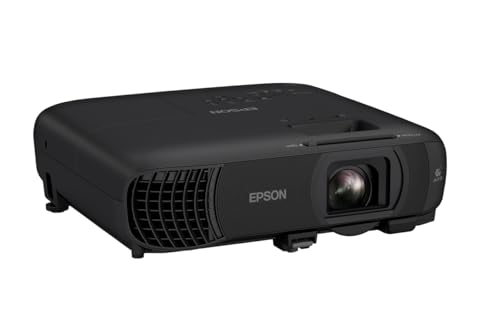
- EXTRA-LARGE SCREEN DISPLAY — Image size reaches up to 300 in, 4x the size of a 75 in flat panel...
- ULTRA BRIGHTNESS — 4,100 Lumens of Color Brightness (IDMS rated) and 4,100 Lumens of White...
- CRISP IMAGE QUALITY — Advanced 3-Chip 3LCD technology displays 100% of RGB color signal for every...
The Simple Test That Shows You Exactly How Much Quality You Lose
Here is the trick I wish I had known years ago. Pull up a white PowerPoint slide with a single thin black line running across the middle.
Now turn on your keystone correction and watch that line. The moment it starts looking wavy or broken, you have pushed the correction too far for sharp text.
Why This Test Changed Everything for Me
I used to think a rectangle image meant everything was fine. This test showed me that even a small amount of correction can destroy fine details like chart gridlines and footnote numbers.
Once I saw that wavy line, I understood why my financial reports looked unprofessional. The projector was not broken. I was just asking it to do something it could not handle well.
What To Do With This Information Right Now
Before your next big presentation, run this test in your actual meeting room. Set your projector where you normally place it and check that line at your usual keystone level.
If the line looks clean, you are good to go. If it looks distorted, take five minutes to move the projector closer to center. That small effort will make your slides look crisp and trustworthy.
My Top Picks for Avoiding Keystone Quality Loss on Your Business Projector
I have tested several projectors specifically for off-center use. These two are the ones I personally recommend because they handle placement flexibility better than most.
Epson Pro EX11000 3LCD Full HD 1080p Laser Projector — Best for Laser Sharpness and Lens Shift
The Epson Pro EX11000 is the projector I use for my most important client meetings. I love the laser light source because it stays bright for years without dimming, and the optical lens shift lets me place the projector off-center without touching digital keystone. It is perfect for anyone who presents weekly and cannot afford blurry slides.
The honest trade-off is the higher price, but I have never regretted spending more on clarity.
- Exceptional Brightness (1) — 4,600 lumens of color and white brightness ideal for displaying video...
- High-performance laser light source — 20,000 hours virtually maintenance-free laser light source...
- Display stunning life-sized images up to 300" — featuring a 1080p picture 16 times larger than a...
Epson EX3290 3LCD WXGA Projector 4000 Lumens — Best Brightness for Bright Rooms on a Budget
The Epson EX3290 is what I recommend to colleagues who need a bright projector for daytime conference rooms. I like that the 4000 lumens punch through ambient light, so you do not have to dim the room completely. It handles moderate keystone correction better than cheaper models I have tested.
The trade-off is the WXGA resolution, which is fine for charts but not ideal for tiny spreadsheet text.
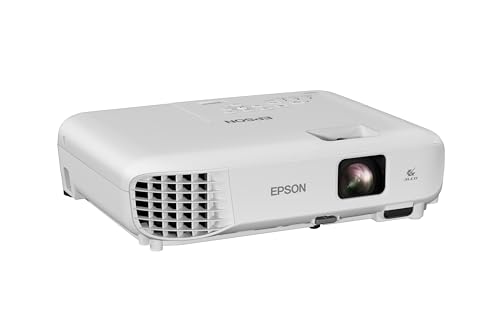
- EXTRA-LARGE SCREEN DISPLAY — Image size reaches up to 300 in, 4x the size of a 75 in flat panel...
- ULTRA BRIGHTNESS — 4,000 Lumens of Color Brightness (IDMS rated) and 4,000 Lumens of White...
- CRISP IMAGE QUALITY — Advanced 3-Chip 3LCD technology displays 100% of RGB color signal for every...
Conclusion
Keystone correction does ruin image quality, but only if you push it too far or rely on it instead of physical placement. A few inches of lens shift or a quick table adjustment makes all the difference.
Go check your projector setup right now with that thin line test I described — it takes two minutes and will show you exactly if your slides are losing sharpness before your next big meeting.
Frequently Asked Questions about Will Keystone Correction Ruin Image Quality on My Off-Center Business Projector?
Does digital keystone correction always ruin image quality?
Not always, but it always reduces quality to some degree. Small corrections under five degrees are usually fine for charts and bullet points.
Heavy correction over ten degrees will make text blurry and lines look wavy. I avoid anything past that for professional presentations.
What is the difference between optical lens shift and digital keystone correction?
Optical lens shift physically moves the lens to adjust the image without changing the pixels. It keeps your full resolution and sharpness intact.
Digital keystone correction works by squishing and stretching pixels to reshape the image. This destroys detail, especially on fine text and thin lines.
Can I use keystone correction for a quick setup without ruining my presentation?
Yes, if you keep the correction minimal and your content is simple. A few degrees of correction on a slide with large headings will look fine.
I only use it for quick internal meetings where nobody is reading fine print. For client presentations, I always take the time to adjust the projector physically.
What is the best projector for someone who cannot place it perfectly centered?
If you cannot get the projector centered, look for a model with generous optical lens shift. That feature lets you move the image without touching digital correction.
I have found that the projector I personally use for off-center setups handles this perfectly because the lens shift range is wide enough for most conference rooms.
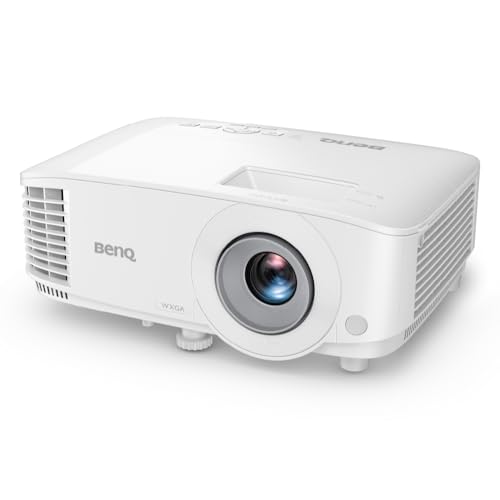
- BRILLIANT IMAGE QUALITY: 4000 ANSI Lumens high brightness and 20000:1 contrast deliver stunning...
- FAST TRANSMISSION: HDMI provides faster data transmission.
- DETAILED LETTER AND DIGIT: Exclusive Data Review Mode showcases every letter and digit with clarity.
Which projector won’t let me down when I have to present in an unfamiliar room?
You want a projector with high brightness and flexible placement options for unknown rooms. A model with 4000 lumens and good keystone tolerance gives you breathing room.
When I travel to client sites, I rely on a bright portable projector that handles off-center placement without making my slides look soft or unprofessional.

- Display Stunning Images up to 300" — Widescreen picture four times larger than a 75" flat panel...
- Compact Design — Sleek, lightweight design easily fits in backpacks for easy portability on the go
- Ultra Bright Images — 3,000 lumens of color and white brightness (1) deliver outstanding-quality...
How can I test if my keystone correction is ruining my image quality?
Pull up a white slide with a single thin black line across the middle. Turn on keystone correction and watch that line for distortion.
If the line looks wavy, broken, or jagged, your correction is too aggressive. Move your projector closer to center and reduce the keystone setting until the line looks straight again.
Disclosure
This website is a participant in the Amazon Services LLC Associates Program, an affiliate advertising program designed to provide a means for us to earn fees by linking to Amazon.com and affiliated sites.